
Conservatism: America’s Personality Disorder
A military police officer turned researcher explores the relationship between politics and the psychological traits that accompany empathy disorders.

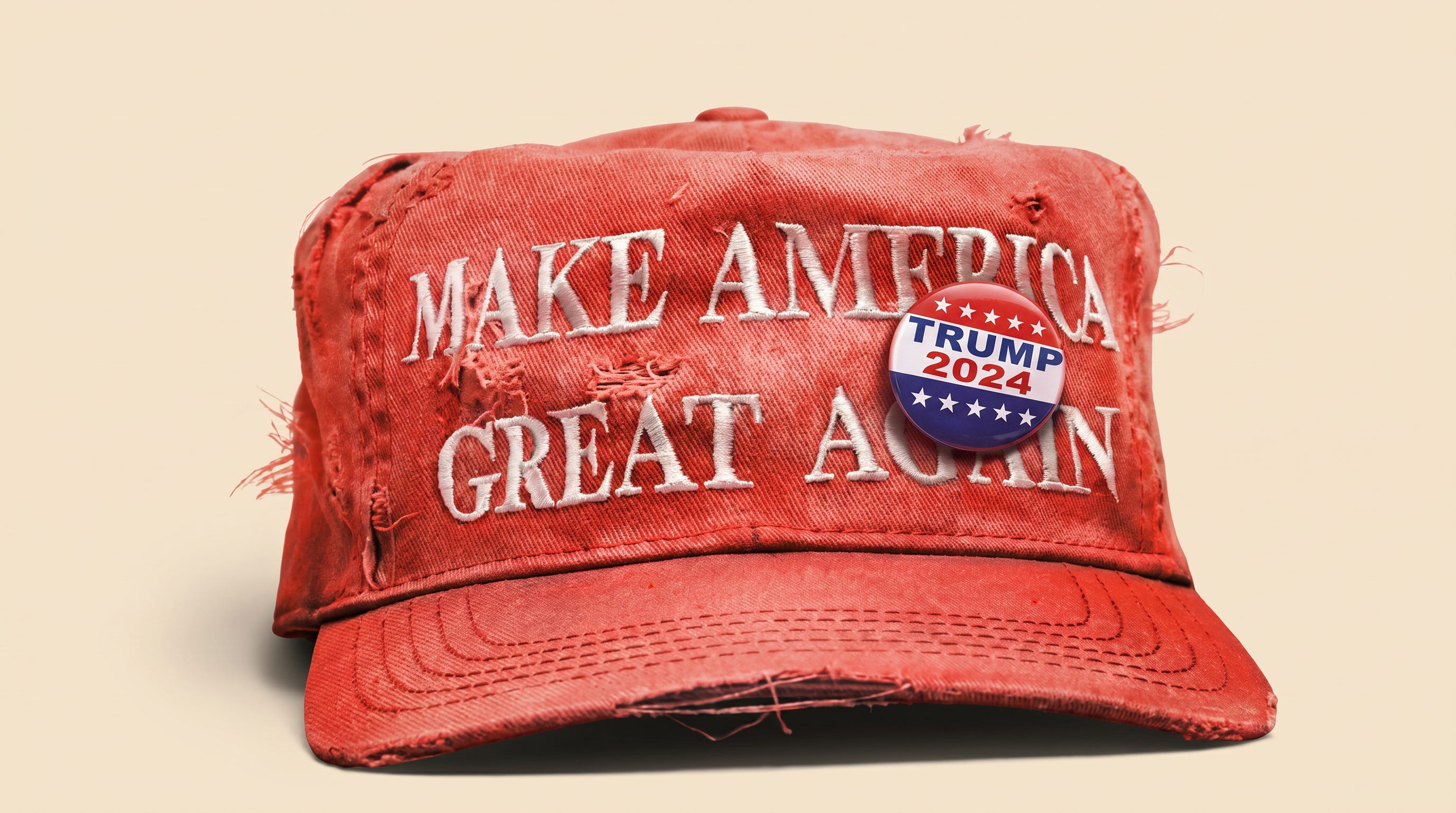
This essay covers information from my collaboration with retired clinical psychologist D. Carl Brown, PhD, in our book Conservatism: America’s Personality Disorder, available by clicking on this text.
For readers interested in how oligarchic power structures work in practice, I highly recommend my mother’s Substack, W. Lawrence’s Glass Empires.
For just under a year, I was a corrections officer. I had been Air Force military police for nearly a decade, and I knew this would be a job with good benefits and competitive pay. I didn’t even make it a year before I left. The experience was changing me in ways I found painful. My sense of humor disappeared. I became far more guarded. On a daily basis you would meet people who had committed the kind of acts that change you simply by learning such things occur at all, and then the person convicted of committing them would ask you for their mail. The experience changes you, and I knew those changes were not acceptable to me.
Keep that timeline in mind as you read: less than a year in that environment was enough to measurably change a person with almost ten years of military police experience. Thankfully, I eventually saw “me” return. It took about the same amount of time as I had spent working inside the facility. That experience, along with what I learned from the Black Lives Matter movement, is a large part of how I ended up doing the work I do now. The movement taught me to ask who actually ends up inside these buildings and why, and the prison answered that question every day I worked there. What follows is what I learned from that year and how it relates to MAGA, empathy, and America.
Every morning at the prison where I worked, I’d pass through the same ritual. Badge in. Keys collected. Radio check. Then the walk through the sally port into a world where empathy was a liability and cruelty as much of a currency as ramen. What I didn’t expect was how much that world would teach me about the one outside the wire, about the officers who guarded, the politicians who governed, and the invisible psychological threads connecting them all.
The dayroom was where you could see it most clearly. Inmates would cluster around the television, not for sports or soap operas, but for politics. The people in that dayroom belonged to a population where, according to a comprehensive Lancet review by Fazel and Danesh (2002), 65% of male prisoners meet criteria for a personality disorder, including 47% with antisocial personality disorder. They watched Fox News with religious devotion, cheering for Trump like he was their personal champion. “No bullshit from him,” the inmates would say. “He’s gonna take care of everything.”
But a statistic is not a roster, and the range of people inside that building was wider than any statistic suggests. There were people who had done things I will not describe. There were people who had brutally assaulted corrections officers. There were people warehoused there because the country closed its psychiatric hospitals and built prisons in their place, people whose crimes were rooted in addiction, people with developmental disabilities, and, statistically, some people who did nothing at all. Some belonged in a healthcare facility and would never see one. And there was an operational fact that shaped everything else in this essay: standing in the dayroom, you could not tell who was who.
In my observation, the sex offenders seemed to express the most frequent adoration and fealty for Trump.
They had violated the most fundamental boundaries of human empathy, and they appeared to find something familiar in a politician who bragged about grabbing women “by the pussy,” who had been found liable for sexual abuse in the E. Jean Carroll case, who treated women’s bodies as territory to be conquered. They would gather closest to the TV when he spoke, nodding along when he denied accusations, claimed victimhood, attacked his accusers. The people convicted of predatory crimes identified with rhetoric that mirrored their own rationalizations.
Then I started paying attention to my fellow officers’ conversations. The subjects of discussion were often eerily similar.
The break room had its own speech rules. Conservative officers announced their politics daily and loudly, with no apparent thought that anyone might disagree. The rest of us kept our mouths shut until we sussed out who was in our lane. I privately thought of that second group as the “low-key lefties.” There were not many of us, and some had come to the job from social work. For months I believed my coworkers were almost universally conservative. I was wrong, in an instructive way: the visible politics of the facility was universally conservative, because only one kind of politics could be said out loud there. The environment shaped more than conduct: it decided which beliefs could be spoken, and the beliefs it permitted were the ones that matched how the place already ran.
The daily subjects rarely varied: their love of Donald Trump, the evils of socialism, the evil ex-wives, the adult children who no longer called. They lamented, often, that the days were gone when an officer could settle things with an inmate with his fists and face no consequences. And trans people. Not a day passed without a long transphobic rant, though trans people were maybe one percent of the incarcerated population, and the officers doing the ranting could go weeks without interacting with one. The centerpiece was a claim repeated as established fact and never once sourced: that the state was spending millions of dollars per trans inmate on gender reassignment healthcare. Years later, records requests filed by hostile conservative media put a real number on it: through mid-2024, Washington’s prison system had spent $592,577.67 total on gender-affirming healthcare, across 44 incarcerated people. That works out to roughly $13,000 per person, around one percent of the break room’s per-person claim, and the sourcing matters: even the outlets working hardest to inflame the issue could not document anything close to the figure repeated daily in that room. I later recognized the same ratio on cable news: a group that is roughly one percent of the country, discussed nightly at a frequency that suggested it was half.
All of this while collecting union-negotiated state employee salaries in a blue state. Our compensation packages dwarfed what our counterparts made in red states. In Washington, correctional officers average around $45 an hour according to state data, while in states like Texas or Florida, the low-tax havens they praised, the same job pays roughly half that.
Politics and conduct were separate questions. Not every conservative officer was cruel to the people inside; I worked with conservatives who treated the incarcerated fairly the entire time I knew them. But none of the officers I knew to be left-leaning were ever cruel or unfair to an inmate, and the “low-key lefties” shared a habit I rarely heard from the loud conservatives: they were willing to say the words “maybe I’m wrong.” The honest limit on that observation is that the group was small, and I could only know the politics of officers who chose to reveal them. I never learned what kept the decent conservatives decent. I know what kept the lefties fair, because I watched it: the habit of doubting yourself out loud.
Many officers I worked with seemed to have troubled family lives, a pattern that aligns with research showing law enforcement faces domestic violence rates as high as 40% in some studies (Johnson, 1991), compared to 10% in the general population. One colleague, going through his third divorce, once told me that “kindness gets you killed in here,” meaning the prison. But I knew he lived by that rule everywhere: at home, at the ballot box, in every human interaction reduced to a zero-sum game of dominance and submission.
I began to see a pattern that my psychology training wouldn’t let me ignore. The same personality traits that concentrated behind bars, what psychologists call the “dark triad” of psychopathy, narcissism, and Machiavellianism, were appearing throughout our political system. The empathy deficits that defined prison life weren’t confined to cellblocks. They were running for office, hosting talk shows, and writing legislation.
Hard neuroscience backs this up. When researchers at Aalto University in Finland (Zebarjadi et al., 2023) put conservatives and liberals in magnetoencephalography scanners while asking them to imagine others’ suffering, they found something striking: conservative brains literally showed less activation in empathy-related regions, specifically the temporal-parietal junction. The difference was visible on the scans, liberal brains showing significantly stronger neural responses to others’ pain, while conservative brains remained comparatively muted.
The effect intensified with political extremity. The study of 55 participants found that the more someone endorsed right-wing authoritarian values, the weaker their neural empathy response.
The personality psychology tells the same story. A comprehensive review by Stephen Morris (2020) in the Journal of Social and Political Psychology found that empathy has become “a hallmark of the political left,” with trait empathy scores consistently predicting liberal attitudes across dozens of studies. The Pew Research Center’s 2014 data is particularly telling: 86% of consistently liberal parents say teaching empathy is “especially important” for children, compared to just 55% of consistently conservative parents, a 31-point gap in valuing compassion itself.
Research by Costello et al. (2022) found left-wing authoritarianism exists, but even militant leftists typically fight for strangers they’ll never meet, while right-wing extremists I encountered kept their circle tight: family, race, nation. That circle is measurable. Waytz and colleagues (2019) documented ideological differences in the expanse of the moral circle across seven studies: conservatives concentrate moral concern on family and nation, while liberals extend it outward toward strangers and the world. The Costello study also found that left-wing authoritarians scored lower on dogmatism and cognitive rigidity than their right-wing counterparts, which matched what I had watched in the break room.
One caution about all of this research, from someone who lived inside its subject matter: scans and surveys describe where people are. My year behind the wire showed me how quickly where people are can change, in both directions.
When a retired cop, now on his second career as a corrections officer, told me he “would go to D.C. and die for Trump,” I had to believe him.
States with abortion bans have maternal mortality rates 62% higher than states protecting reproductive rights, and the gap did not stay theoretical after the bans took effect. ProPublica’s analysis of Texas hospital data found that after the state banned abortion in 2021, the sepsis rate for women hospitalized during second-trimester pregnancy loss rose by more than 50%, and maternal deaths rose in Texas while they dropped nationally. Women are dying from policies enacted by legislators who lack empathy for strangers.
The same deficit explains welfare attitudes. In two survey experiments, Feldman and Huddy (2020) found that the capacity for empathy strongly increased support for a welfare recipient and for social welfare policies, but only when that support did not conflict with a belief in individualism. When the two values conflicted, individualism overrode the empathic response, and it overrode it most among the strongest conservatives. A person can feel for the recipient at a church soup kitchen and feel nothing for the same person on food stamps.
What troubles me most, looking back, is how these traits spread. In prison, new officers would often arrive with normal empathy levels. Within months, they’d adopt the callousness that seemed necessary to survive. Here is why, and it is fairer to the officers than it sounds. The files told you which person on the tier had done what. The dayroom did not. The danger was real and concentrated, manipulation of officers was commonplace, empathy gave a skilled manipulator something to use, and an officer who guessed wrong about the person in front of them could be maimed. So the rational default was to treat every person on the tier as the most dangerous one. Universal suspicion became policy, and universal suspicion kills empathy by procedure rather than by character. Nobody had to be a bad person for the empathy to die; the procedure was enough.
The oldest guards showed the end state. In my observation they behaved nearly indistinguishably from the cruelest of the people they supervised, and I am certain that if their roles had been reversed, each would have been exactly like the other.
Here is the observation from that year I have thought about longest, offered as nothing more than what I saw. Of the trans people incarcerated there, most, perhaps two of every three, had a history I could not have guessed from meeting them: they had been white supremacist gang members, and often particularly aggressive, particularly openly racist ones. By the time I knew them, nothing in how they carried themselves would have told you that. I have no standing to tell anyone’s inner story, so I will only report the outward facts. The gang identity was gone, and the exit had a real cost, because a white supremacist gang does not keep a member who comes out as trans, and losing your gang in prison means losing your protection. The identity they had left was the hateful one. The people the break room ranted about every day were, right in front of us, proof that even a violent, hateful identity can end.
And then there was me. Part of why I left was that I saw my own personality shifting in ways I didn’t like. The suspicion the job required did not shut off when I went home after shift. I had seen the end state in the oldest guards, and I did not want to reach it.
I see the same selection pressure in politics. The conservative media ecosystem rewards cruelty. Social media algorithms amplify hostility toward out-groups, a pattern Facebook’s own internal researchers documented when they found the platform’s engagement algorithm rewarding outrage, while right-wing audiences form intense parasocial bonds with hosts who model callousness. When Tucker Carlson, who once mocked dying AIDS patients, becomes a trusted “friend” to millions, his cruelty becomes contagious.
The parallel to the prison goes deeper than tone. Inside, the uncertainty was real. The danger was concentrated, I genuinely could not tell who was who, and suspicion was a rational adaptation to an honest problem. The cable audience’s uncertainty is manufactured nightly. Every migrant might be the killer. Every trans person might be the predator. The viewer is trained into the officer’s posture toward a country that has no sally port and no base rate to justify it. One environment forces the adaptation; the other sells it.
The prison mirror reflects perfectly here: just as inmates must perform toughness to maintain status, conservative politicians must perform cruelty. Expressing empathy for the wrong group, immigrants, trans kids, the poor, marks you as weak, a “RINO” who’ll get primaried. The 2013 House vote on SNAP cuts exemplified this: 217 Republicans voted to slash food stamps by $40 billion, with not a single Democrat supporting it. The incentive structure selects for empathy deficits.
I left law enforcement eventually, but the lessons stayed with me. That prison dayroom where inmates fawned over Trump while officers in the break room did the same wasn’t an anomaly. It was America in microcosm.
The murderers and sex offenders in that dayroom knew exactly what Trump was because they saw themselves. They saw their behavior mirrored and even applauded. When he played victim after being found liable for sexual abuse, they recognized the playbook. They didn’t love him despite being a predator. They loved him because of it.
The same psychological traits that put some people behind bars put others in boardrooms and state houses. The difference wasn’t virtue but circumstance: class, race, the luck of when and where their dark triad traits manifested.
American conservatism has become an ideology that systematically suppresses empathy. It rewards the prison mentality: dominate or be dominated, trust only your tribe, see kindness as weakness. It’s created a political movement that mirrors the psychological dynamics of incarceration, complete with gang colors in the form of red hats and protection rackets in the form of vote-for-us-or-the-criminals-will-get-you rhetoric.
But empathy can only be rebuilt if people want to rebuild it. At the moment, we have a media ecosystem that feeds their disorder, a political system that rewards their cruelty, an economy that promotes their psychopathy. Working as a corrections officer didn’t just teach me harsh truths about human nature. It taught me that we’ve structured society to mass-produce them.
None of this is fate, and the fixes are not mysterious. Stop using prisons as the country’s largest mental health facilities, so the people warehoused for illness get a hospital instead of a tier. Change what the correctional officer’s job selects for, through staffing levels, training, and real mental health support, so the rational adaptation stops being callousness. Treat empathy as what the research shows it to be, a teachable skill: a meta-analysis of eighteen randomized controlled trials found that empathy training works, with a medium effect size, across ages and settings. And hold the algorithms accountable for what they amplify. Each of those deserves its own article and its own model legislation, and that is work this publication exists to do.
Where does the public will for any of that come from? From movements, on a timescale that news coverage cannot see. Movements are routinely declared failures because they produce no legislation within a year, but what they actually produce is changed minds, and changed minds show up in the polling five, ten, and twenty years later. Support for same-sex marriage stood at 27% when Gallup first asked in 1996; by 2021 it reached a record 70%, among the largest shifts Gallup has ever measured. Occupy Wall Street passed no bills in 2011, and within a year its veterans were helping organize the Fight for $15; a decade later the $15 minimum wage was law in cities and states across the country, and economic inequality had become a default frame of American politics. Black Lives Matter reshaped how Americans understood policing and discrimination between 2014 and 2020, and whatever the movement’s approval polling does in any given year, that changed understanding is what lasts. It also produced people like me: a veteran, a former cop, a former corrections officer, who now writes model legislation for a living. It is too early to measure what No Kings changed; if it follows the same pattern, the changes become measurable years from now. The conservative media machine narrows the circle of who counts as worth caring about; movements like these widen it.
Of course, the glib lesson was that people without empathy love their toxicity reflected Donald Trump. The real lesson took longer to see. It is a rare human whose views, habits, beliefs, and identity are not shaped largely by the people around them. Environments built on suspicion and dominance reshape whoever enters them, prisons do it fast and visibly, the conservative media and incentive structure does it slowly and at national scale, and I am the evidence, because the reshaping happened to me, it made me guarded, humorless, and quick to assume the worst while my politics never changed, and it reversed after I left.
If you found this article worthwhile, and want to see this type of content along with our model legislation, free educational booklets, and free training, all continue, please consider being one of the 10 subscribers that keeps it alive for everyone. Don’t let it this be the reason you skip a meal or miss rent. Thank you to everyone for showing up to arm yourself and others in our fight for the future of humanity.
The Existentialist Republic Library
You can get a free PDF of the book in the BMAC shop for $0.00 by clicking on this sentence.
More reading
Conservatism: America’s Personality Disorder — physical copy / free download
Intro to Soft Secession — physical copy / free download
Oppositional Federalism and You — physical copy / free download
Toppling Tyrants: A Field Guide to Dismantling American Fascism — physical copy / free download
Grab Them By The E.A.R.R.: How to Get Politicians to Do What You Want — physical copy / free download
More Free Downloads:
Soft Secession: 100 Policies That Pass
Being Dangerous: Go From Activist to Operative
All Four Completed Model Legislation Bills
The Opposition Guide to Tax Warfare
Six-Panel Soft Secession Brochure
Thank you, Christopfer, for helping me understand my son who was in prison for 21 years. When he came out he wasn't the same man. Your essay gave in some insight into why he changed so much in a negative way.
Too true. I had a student who worked at a prison. He emphasized that there was not much difference on either side of the bars…