
Stochastic Activism
The rules apply everywhere

Ten subscribers per article. That’s what keeps this publication, the model legislation, and this organizing community alive. It works out to around 20–30 cents per article. Otherwise it cannot continue. If this helps, help back. BuyMeACoffee.com/TheER
“Nature uses only the longest threads to weave her patterns, so that each small piece of her fabric reveals the organization of the entire tapestry.” — Richard Feynman, The Character of Physical Law (1965)¹
A chaotic system is not a random system. Precise, unchanging rules govern a chaotic system and determine its outcome. What makes it chaotic is that you cannot predict individual events in advance, not because the rules are absent but because the system is too complex to trace from cause to effect at the individual level. You cannot follow any single raindrop from cloud to ground, but you can predict with certainty that it is going to rain.
A stochastic process works the same way. Roll one die and the outcome is anyone’s guess, but roll ten thousand dice and the distribution of results becomes statistically inevitable. The randomness lives at the individual level; the certainty lives at the aggregate. Both describe the same system from two different altitudes.
In the winter of 1170, King Henry II of England said words to the effect of “Will no one rid me of this turbulent priest?” Four of his knights heard it, rode separately to Canterbury Cathedral, and killed Thomas Becket on the altar steps. Henry issued no official order and no coordination happened between the four men; the signal was broadcast and the probability distribution handled the rest.² Researchers who study political violence eventually gave this mechanism a name: stochastic terrorism. A person with a large platform broadcasts that a particular group of people or individual are dangerous, subhuman, an existential threat to everything decent. He does not instruct anyone to commit violence or coordinate with anyone; he simply turns up the signal, consistently, at volume, and repeats it. Somewhere in the population receiving that signal, the probability distribution does what probability distributions do, and someone acts. No one planned it or ordered it. The violence was unpredictable at the individual level and statistically almost guaranteed at the aggregate level. The broadcaster provides the conditions and steps back while maintaining plausible deniability.
Now watch what happens when you flip it.
A publisher sends an article to fifty thousand subscribers. The article explains that DOGE employees transferred Social Security Administration data to an unauthorized outside server, sent a file containing the private records of roughly a thousand people to outside affiliates, signed an agreement with a political group seeking to use that data to challenge election results, and continued accessing SSA data after a federal judge ordered them to stop. The government’s own lawyers documented all of this in a federal court filing on January 16, 2026.³ The article explains that state computer crime statutes cover this conduct, that the president cannot pardon a state criminal conviction, and that here is the complaint filing process for your state.
Nobody coordinates with anybody, and nobody knows which complaint lands on which desk or which attorney general wakes up on which morning feeling particularly brave and ambitious. Readers filed over a thousand complaints across more than twenty states.⁴ The system self-organizes; the broadcaster provided the conditions while readers did the rest.
This is stochastic activism. It follows the same physical laws as stochastic terrorism because it is the same mechanism turned toward a different end.
An organization that demonstrated this mechanism was the AIDS Coalition to Unleash Power (ACT UP). Founded in 1987 with no central headquarters anyone could raid and no single leader anyone could arrest, the organization ran distributed direct action campaigns across dozens of cities simultaneously, with chapters making independent tactical decisions while pursuing the same goal. Within a decade they had significantly impacted the entire federal drug approval apparatus for the lifesaving research and drugs their community needed.⁵ They understood the system and acted inside it at volume, under sets of principles, guidelines, and tactics, rather than centralized command structure or expansive planning and coordination.
Now let’s add the thermodynamics.
When you excite an atom, it transfers energy to the atoms around it. It doesn’t use Roberts Rules of Order, coordinate with the receiving atoms, or need a central command structure telling it which direction to move. Energy transfers through matter according to laws that predate every government that has ever existed and will outlast every government that will ever exist. An atom moves around more, that creates what we call heat, sufficient heat applied to any system then produces changes that system; movement and time are the only variables.
Every person who files a complaint, makes a call, sends a letter, shows up at an office, crashes a fundraiser, or loudly shows up somewhere they were not expected is an atom now excited and generating energy. They transfer energy to the people immediately around them, those people transfer it further, their actions can even become amplified, this movement and energy generates heat. Heat softens and melts and allows reformation.
Entropy is the term for energy dissipation over time. Systems trend toward slowing down, losing heat, and eventually going cold. Our universe started with the hottest moment that has ever existed, and it has been losing heat ever since. Stars explode into smaller stars with less and less heat, and eventually there are no stars, just cold dead rocks. Scientists call this the heat death of the universe. When people join an organization and have their enthusiasm crushed by excessive meetings and minimal impact, that energy dissipates. Enthusiasm, heat, action: they are the same thing, and we need all of it.
The United States government is part of that universe. This country was born in revolution, from the heat of enlightenment ideals igniting enough energy among the people to throw off an empire and forge something entirely new, founded on the radical idea that a nation should exist for its people rather than the other way around. That was our big bang. Entropy has taken its toll, and the system has grown stale, cold, and increasingly antagonistic to the people it was built to serve.
Today, Congress is the sharpest example of this institutional entropy. In 2024, congressional incumbents won reelection at a 98% rate.⁸ You can probably guess that Americans don't have a 98% approval rating for Congress, in fact their approval rating currently sits around 15%.⁹ The same people return, make the same deals, and the energy that was supposed to flow from citizens through their representatives into public life dissipates instead into personal wealth and institutional self-preservation. The institution still holds its shape the way a dying star does, but it gets dimmer and dimmer and eventually stops producing light.
Governments are not closed systems, though, and that changes everything. The second law of thermodynamics describes what happens when no new energy enters. We are the new energy.
Here’s one example of what that looks like in practice. State legislators report that six to eight constituent contacts on one side of an issue feels like a landslide of public opinion.⁶ Six people. That is a Tuesday afternoon, and three excited atoms finding three others.
Here is where the traditional organizing model gets this wrong. It generally assumes that change requires unified command structure, central coordinators, recognized leadership, and headquarters someone can point to, but that model was built for a different world. In the current surveillance environment, a movement with a headquarters, a leader, and a central message operation hands the adversary three targets.
A weather pattern cannot be arrested, and you cannot surveil a system with no command node or anticipate the strategy of ten thousand people who each independently decided to do the same thing for their own reasons on their own timeline without consulting anyone. Decentralization is the beating heart of democracy.
Let’s think about what this means for how we understand our own actions. The person who filed a complaint and heard nothing back did not fail. They were one variable in a chaotic system, one die in a set of ten thousand, one atom transferring energy into a network that extends far beyond anything they can see. The silence doesn’t mean the water isn’t heating.
Water does not gradually become steam. It absorbs heat invisibly, degree by degree, with nothing to show for it, until it hits the threshold and the phase transition happens all at once. The heating was always working and the change was always coming; it just was not visible until it was total.
Concentrated power can capture courts, restructure agencies, pardon allies, and control the information environment, yet it cannot repeal the second law of thermodynamics. It cannot negotiate with a chaotic system or hold still a population of people who understand that their individual action feeds a process that has never, in the entire history of matter and energy, produced a different result when these conditions are met. Physics, unlike the current Supreme Court majority, is not subject to reversal.
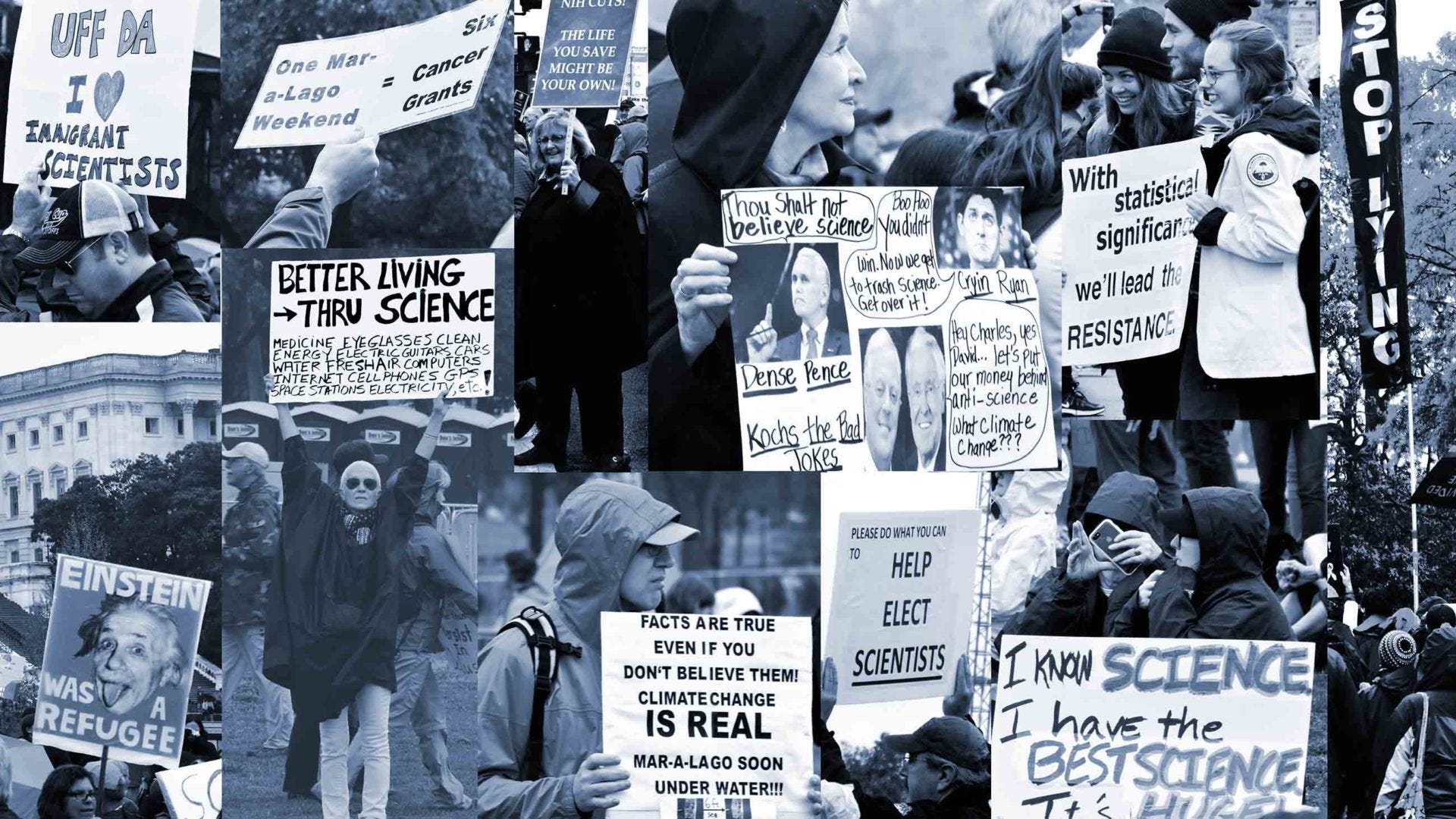
Carl Sagan wrote that science is a way of thinking much more than it is a body of knowledge.⁷ Nobody needs a physics degree to think like a scientist, and nobody needs a platform, an organization, a leader, or permission to act like one. Design your experiment. File the complaint. Make the call. Write the thread. Show up somewhere you were not expected. Measure what generates heat and do more of that. Every one of us can set conditions and release them into the system. Every one of us can be the broadcaster. The more of us who understand the physics of activism and act accordingly and independently, the faster the heat builds and the less any single point of failure matters. Be a scientist. Become a more influential atom.
We have been trained to measure our actions against the power directly in front of us and conclude that we are too small, but we are measuring at the wrong altitude. Measure at the aggregate level, across the full distribution of people doing the same things independently across the full geography of this organism we call a nation, and the picture looks different.
These laws answer to no legislature, no court, no executive order, and have no expiration date. They govern everything, and no king has ever been an exception.
So why did I write this? Not to explain the physics for its own sake. I wrote it to tell you plainly that what you are doing matters, that the heat you generate is real, that the system you are pushing against is not as immovable as it looks, and that the laws of this country might have been weaponized against freedom and justice, but the laws of the universe are on our side. File the complaint. Make the call. Show up somewhere you were not expected. Create heat and become change.
So what now? The Existentialist Republic has three full length books and a dozen booklets all available for free with download links below. You can also check out our four pieces of model legislation that are shared directly with legislators and activists. You can comment on this post asking for a link to join the Discord community of nearly 1,000 activists.
All of it runs on ten subscribers per article, about twenty cents per article for a subscriber.
You and I and 53,274 others have hit that minimum number of subscribers now for ten articles in a row after missing it for several weeks. That’s 10 of the 30 days we need this month to keep everything moving.
Don’t let this be the reason you miss rent or skip a meal. For everyone else, you can be one of the ten today and make sure the articles, books, legislation, and training keep coming for everyone.
Thanks for being here.
Conservatism: America’s Personality Disorder — physical copy / free download
Intro to Soft Secession — physical copy / free download
Oppositional Federalism and You — physical copy / free download
Toppling Tyrants: A Field Guide to Dismantling American Fascism — physical copy / free download
Grab Them By The E.A.R.R.: How to Get Politicians to Do What You Want — physical copy / free download
More Free downloads:
Soft Secession: 100 Policies That Pass
Being Dangerous: Go From Activist to Operative
Soft Secession: 100 Policies That Pass
All Four Completed Model Legislation Bills
The Opposition Guide to Tax Warfare
Six-Panel Soft Secession Brochure
Works Cited
Feynman, R. P. (1965). The character of physical law. MIT Press.
Warren, W. L. (1973). Henry II. University of California Press.
Notice of corrections to the record, AFSCME v. Social Security Administration, No. 1:25-cv-00596-ELH (D. Md. Jan. 16, 2026).
Armitage, C. (2026, February 16). Democrats can launch criminal investigations into DOGE, today. The Existentialist Republic. https://cmarmitage.substack.com/p/democrats-can-launch-criminal-investigations
Gould, D. B. (2009). Moving politics: Emotion and ACT UP’s fight against AIDS. University of Chicago Press.
Strand, M. (2018). How many contacts does it take to change a legislator’s mind? Nonprofit VOTE. https://www.nonprofitvote.org/how-many-contacts-does-it-take/
Sagan, C. (1996). The demon-haunted world: Science as a candle in the dark. Ballantine Books.
Ballotpedia. (2024). Election results, 2024: Incumbent win rates by state. https://ballotpedia.org/Election_results,_2024:_Incumbent_win_rates_by_state
Gallup. (2025, October). Congress' job rating sinks to 15%. https://news.gallup.com/poll/696722/congress-job-rating-sinks-trump-steady.aspx
People keep waiting for a moment, a leader, a signal that it’s time.
But when enough individuals act on their own timing and for their own reasons, suddenly the system has to respond whether it wants to or not.
What looks small up close starts to bend things at scale. That’s the part most people underestimate.
Thank you Christopher for explaining the 'why'.
This is why. Why go to a rally? This is why. Why email my representatives when I just get an auto response? This is why. Why call my reps just to leave a voicemail? This is why. Why bother to take action when “nothing happens?” This is why. We all want to be the individual straw that breaks the camel’s back. It is more likely we are not that particular straw but one of the straws that contribute to the load. This article explains why that seemingly insignificant straw increases change in the system. So, add your straw and know, confidently, it is not pointless. That straw, your straw, contributes and is important. It generates heat even if you don’t feel or see it. Read the article and understand that this is why.
"If we have our own why in life, we shall get along with almost any how.” -Friedrich Nietzsche
Add the damn straw.